Services
Residential and Light Commercial Architect Solutions in New Mexico
As your go-to expert for residential and light commercial architect solutions in New Mexico, I am committed to turning your visions into reality. Whether you’re designing a new home or a commercial space, my focus is on delivering value-driven results that enhance both aesthetics and functionality. Contact me to learn more.
Architectural Design
I specialize in crafting architectural designs that are not only unique but also closely aligned with your vision. From the initial concept to detailed planning, I focus on innovation and practicality, ensuring that each design enhances your space and meets your personal or business objectives.
Interior Design
Transform your interiors into spaces that reflect your personal style and enhance your daily life. My approach focuses on optimizing space, ensuring functionality, and adding beauty. Whether it’s a cozy home or a vibrant commercial environment, my designs are tailored to suit your specific needs and preferences.
Site Design
Site design is all about creating layouts that are both efficient and harmonious with the environment. I meticulously plan each site to ensure it integrates seamlessly with its surroundings, combining form and function to create spaces that are attractive, practical, and sustainable.
Architectural Master-Planning
Master-planning is essential for long-term success and coherence in your projects. I work closely with you to create plans that accommodate future growth and adaptability, ensuring your projects can evolve over time without losing their original intent or functionality.
Design Process, Phases, and Fees
The journey of designing and constructing a project is a collaborative effort between the architect and the owner. Decisions evolve over time, starting from broad ideas and goals that refine into a finished design. This ongoing decision-making process concludes only when you, as the owner, occupy the completed construction.
I adhere to industry-standard practices that organize the work into distinct phases, each with its own purpose. We progress to the next phase when you are satisfied with the current stage. The timeline and phases vary based on your project’s complexity, but generally follow a structured format.
Design Phases
- Pre-Design and Programming, Gathering Information from the Client, and Learning about the Project Site
- Schematic Design
- Design Development
- Production of Construction Documents and Obtaining a Building Permit
- Choosing a Contractor through Negotiation or Bidding
- Construction Phase Services
Additional Services
- Obtaining Approval from a Planning Commission
- Regulatory Agency or Design Review Board
Billing, Design Fees, and Catering to a Client’s Needs
Design fees vary based on complexity, type, location, size, quality, schedule, budget, and requested services. Projects may have fixed or hourly fees, determined by their nature. Fees are divided into phases, either as a percentage of a fixed fee or as estimated hours for hourly billing.
The design fees for specialty consultants for structural, mechanical, plumbing, electrical, lighting design, cost estimating, etc., that are included as part of my design services will generally be included within my total design fee. The owner has the option to pay such consultants directly.
I generally require payment of design fees on a monthly basis as the project progresses, with each payment covering the portion of the work, or the portion of the phase, completed in that month. Before the project starts, a fixed fee or an hourly fee (based on an estimated number of hours to complete the work) is set and agreed upon between the architect and owner. This provides everyone with a complete understanding of the fee and billing expectations.
Occasionally, a combination of fixed and hourly fees may occur, with an hourly fee applied to certain phases and a fixed fee to others. Understanding each client’s particular needs is extremely meaningful, and I take care to cater my services and create a billing format to meet those needs.
Reimbursable Expenses
The following project-related costs are not included in either fixed or hourly fees for projects and will be invoiced on a monthly basis, along with basic design fees. These will be actual invoice costs with no markup.
- Printing of documents (excluding printing for my own internal office use) for owner, contractor, or any agency use.
- Mailing and shipping costs for documents, models, samples, etc.
- Travel-related costs, including airfare, lodging, and rental car expenses.
- Application fees such as building permit plan review fees, planning action fees, etc. I prefer that such fees be paid for directly by the owner, but when it is expedient, I will pay the fee and be reimbursed.
Phase 1 – Pre-Design, Programming, and Gathering Information (5–10% of the Total Fee)
Project complexity and the owner’s experience influence the professional services needed in pre-design. Some clients have their requirements ready, while others collaborate with me to define them. This phase may include any of the following:
- Programming: Define design requirements, project goals, functional needs, space relationships and sizes, equipment needs, and site amenities and constraints (landscaping, access, parking).
- Budget Analysis: Align programming needs, project type, and quality with the owner’s budget. Ensure hard costs (construction-related costs) and soft costs (designer/consultant fees, city fees, bank fees, insurance, and interest) meet project goals and expectations.
- Determine How a Contractor is Selected: Will a contractor be chosen through negotiation or bidding? See more about this in Phase 5 below.
- Project Schedule: Analyze factors to create a project schedule, including the owner’s and design team’s schedules and workloads, the owner’s decision-making timeline, project complexity, timeline for building permit acquisition, planning and zoning actions, and contractor availability and workload. The schedule will be re-examined and updated as the project progresses.
- Building Code and Planning Analysis: The design team will research local building codes and zoning impacts early to prevent unexpected design changes later. Requirements vary by location, so this assessment is crucial at this phase.
- Survey and Document Existing Buildings: For additions and remodels, it’s essential to examine and document existing conditions accurately. This can be done by the design team or a third-party consultant hired by the owner.
- Site Survey: Hire a surveying company (usually an expense covered by the owner) to map the project site, detailing property lines, easements, structures, utilities, topography, and vegetation.
- Geotechnical Investigation and Soils Report: Obtain a soils analysis (typically paid by the owner) to assess soil characteristics and strength, optimize the foundation system, and understand subsurface conditions.
Phase 2 – Schematic Design (10–15% of the Total Fee)
Using criteria and information from the pre-design phase, design concepts are explored. One or more ideas are presented to the owner, culminating in a preferred design concept. Documents produced include a site plan, floor plans, building elevations, a 3D or physical model, and sometimes a preliminary construction cost estimate.
Phase 3 – Design Development (10–15% of the Total Fee)
In this phase, the design is finalized, and I coordinate with specialized consultants as needed. Key decisions are made, including the project’s overall look, interior and exterior material selection, building systems, space organization, and site design. Civil, landscape, structural, mechanical, electrical, lighting, and other design consultants contribute their expertise under my coordination.
Documents produced in this phase will evolve into final construction documents in the next phase and include: site plan, floor plans, ceiling plans, building sections, architectural details, exterior elevations, and key interior details. Consultant drawings begin to take shape, and an outline specification of materials and systems is provided if required. 3D and physical models are updated as necessary. This phase concludes when the owner approves the developed design.
Phase 4 – Construction Documents and Building Permit Approval (30–40% of the Total Fee)
Construction documents are the graphic and written technical documents used for construction, bidding, and securing building permits. This coordinated set of drawings and specifications serves as the construction manual. Documents from Phases 2 and 3 are fully detailed and expanded, integrating structural, mechanical, plumbing, electrical, lighting, and life safety systems with the architectural and site design.
These detailed construction documents clearly convey the project’s design intent. I often collaborate with contractors and specialists to enhance design, reduce costs, and shorten schedules. Involving a contractor from Phases 2 to 4 helps control costs and timelines.
The completed construction documents are submitted for building permit approval, with a plan review fee paid separately. The plans are reviewed by multiple agencies, and I address any comments or corrections needed for full approval.
Phase 5 – Selection of a Contractor and Bidding (5% of the Total Fee)
Construction documents from Phase 4 form part of the “contract documents” for the construction agreement. Contractors are typically hired through:
- Negotiation: Selecting a contractor based on qualifications, experience, capabilities, and referrals. The terms of the contract for construction will be negotiated between the owner and contractor, and the construction contract price will be based on the architect’s construction documents.
- Bidding: Providing the construction documents to two or more contractors who submit bids to the owner. This is a competitive process between contractors, but the owner is not obligated to choose the lowest bid.
Determining the contractor selection method early, during pre-design or schematic design, is crucial as it affects the construction documents and design process. I help clients decide on the appropriate contract type.
Involving a contractor throughout the design phases provides valuable cost-control feedback. This is most effective with a single general contractor under a negotiated contract. Such contracts may require the contractor to seek competitive sub-bids, adding a builder’s fee to the total.
For some projects, competitive bidding is preferred. In this method, I oversee the process to ensure all bids align with the same design criteria and standards. While there are pros and cons, this method is often required for publicly-funded projects.
Phase 6 – Construction Phase Services 10–15% of the Total Fee
It is extremely important to keep the architect involved in the project during construction to monitor progress and quality, and ensure the work conforms to the construction documents. Depending on the project, the architect (and the relevant design consultants) will assist the owner with any or all of the following:
- Periodic site visits to document progress and report to the owner.
- Respond to contractor questions and clarify the design intent and detailing as needed throughout the construction phase.
- Managing design changes initiated by the owner, architect, or contractor.
- Review shop drawings, product and finish samples, mock-ups, and product literature for conformance with the construction documents and design intent.
- Review testing agency and regulatory inspections results.
- Evaluating contractor payment requests to verify work completion.
- Assisting with the transition to project completion, including final observations, punch lists, and compiling “record documents.”
- Mediating disputes between the owner and contractor as a cost-effective means of resolution.
Obtaining Approval from a Planning Commission, Regulatory Agency, or Design Review Board
Obtaining these approvals is typically considered “additional services” and billed separately since it’s beyond the standard scope of architectural design. The unpredictable time commitment necessitates a negotiated fixed or hourly fee to cover:
- Preparing applications with written and graphic documents and models.
- Presenting to commissions, boards, and regulatory agencies.
- Organizing and attending design and neighborhood meetings.
- Monitoring the progress of approvals.
Approval work often occurs alongside Phases 1, 2, or 3, as site and building designs need development before submission for approval. Some documents, like site plans and elevations, overlap with design development but must meet specific regulatory criteria.
Each project and locale has a unique approval process, potentially involving multiple steps and timelines. Consultants in site surveying, landscaping, civil engineering, hydrology, and traffic design may be required.
Services
Pre Design
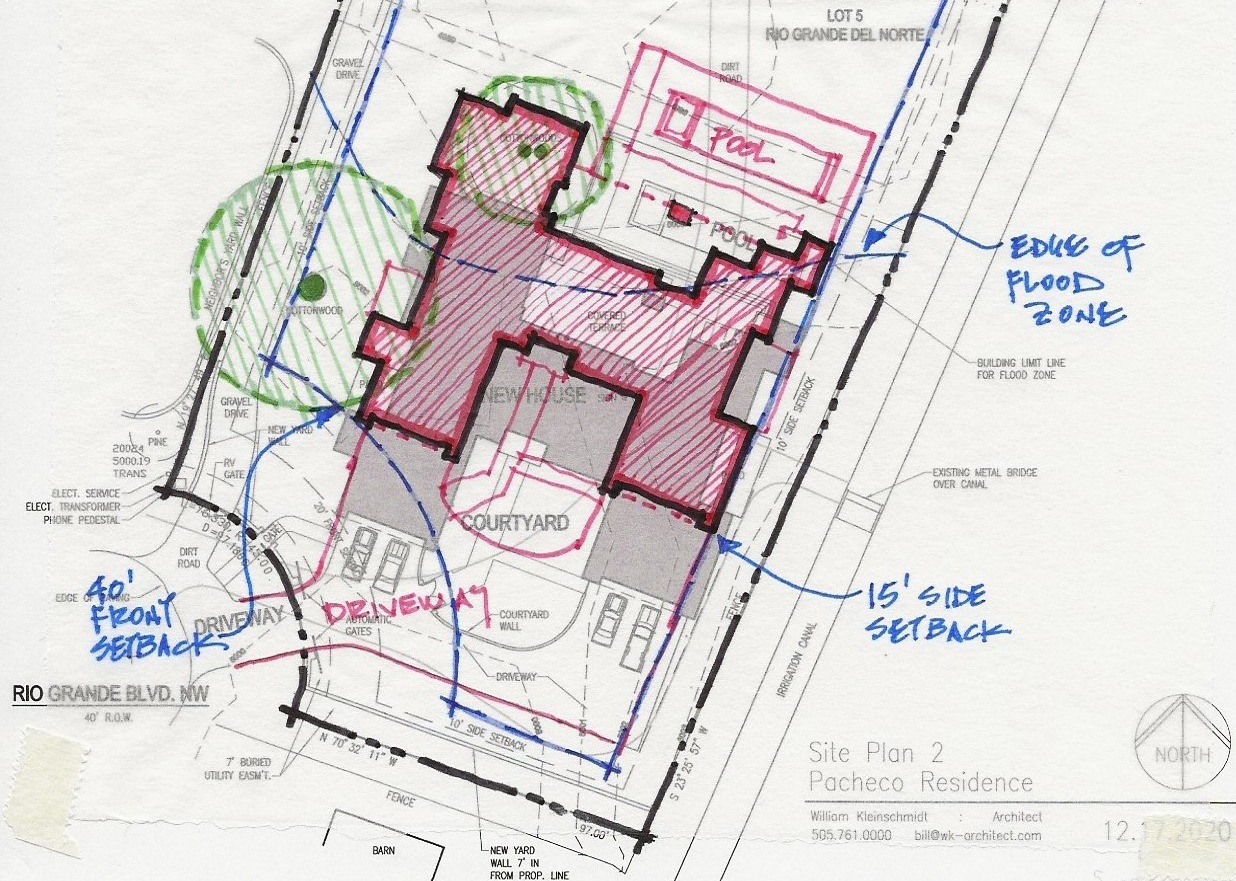
Develop an understanding of the site and existing conditions of the project. For new projects, obtain a site survey identifying property boundaries, topography, site physical features and utilities. For renovation projects, document existing physical features of the site and built structures through field-measurement and photographs. Develop an understanding of the project context by examining nearby structures, vegetation and scale, views, privacy, street access and circulation patterns at and around the site.
Develop a design program upon understanding the client’s project goals and priorities, confirm the client’s detailed program for building and site, project budget, timeline for design, construction and move-in, and determine the client’s sustainability and green building goals.
Identify how the project will be delivered to the client through the sequencing and scheduling of design phases. Maintain close architect-client engagement throughout project development.
Assemble a project team of engineering and design consultants to supplement the architectural and site design. Assist the client in selection of a general contractor if one is needed early in the design process.
As a supplemental service, assist the client in site selection and property acquisition, and provide feasibility studies reconciling specific sites with the client’s project goals.
Design
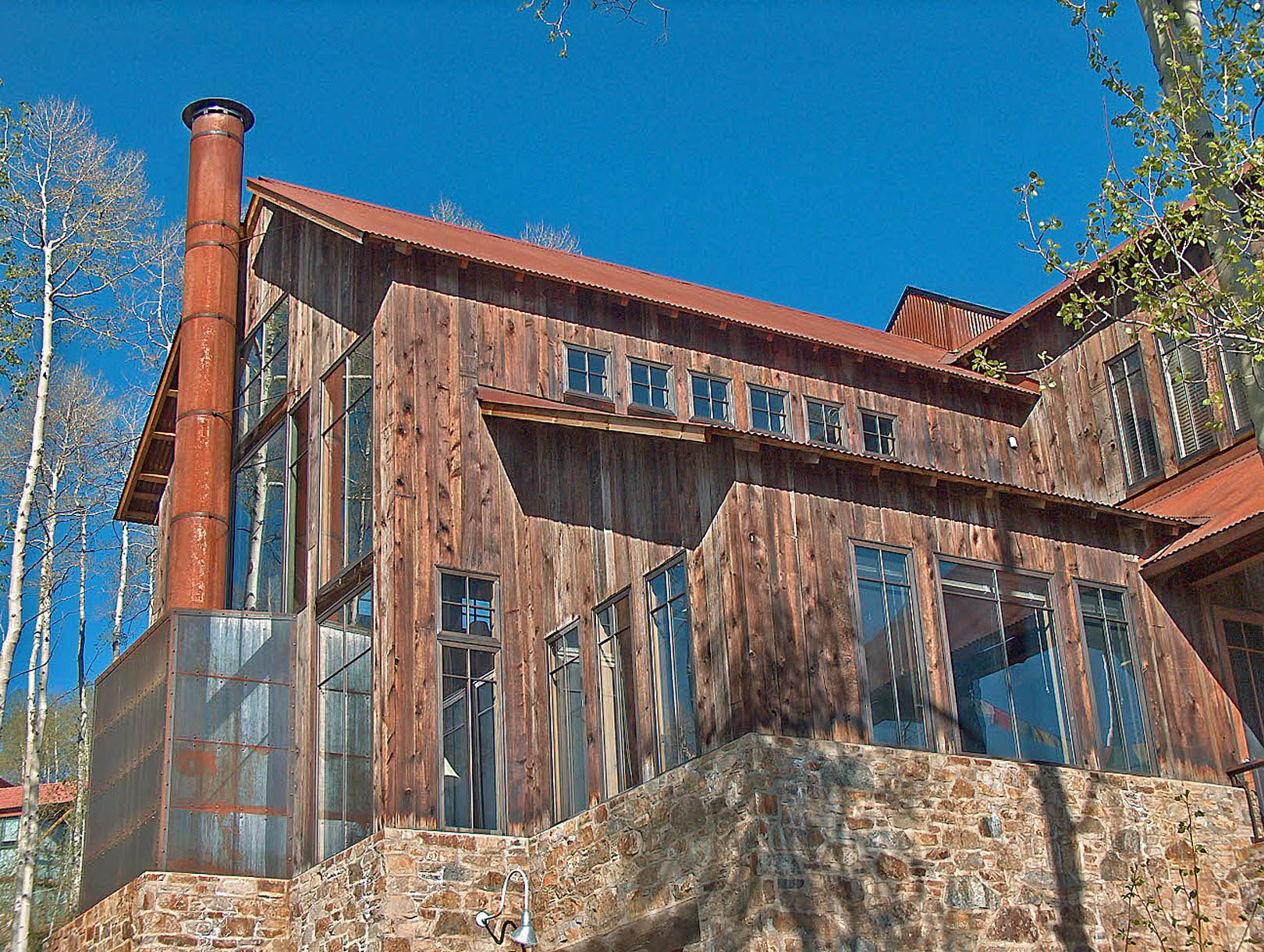
Prepare a preliminary masterplan and concept design based on analysis of the client’s design program and general requirements. Determine the project site or existing structure’s inherent opportunities and limitations relative to the design program. Consider the project budget and building code and land use code restrictions.
Prepare a schematic design, depicted in site plan, floor plans, exterior elevations and possibly digital 3D modeling and renderings for the client’s review and comments. Architect will make design adjustments responding to the client’s comments until the best design is achieved.
Prepare, or assist the client, in preparation of applications and design documents for design review board, neighborhood association and zoning-planning approvals.
Develop a list of specifications and general materials selections for exterior and interior building components that fall in line with the client’s preferences and expectations.
Meet frequently with the client during the design phase (in person or virtually) to review design details, maintain collaboration and receive the client’s design feedback.
Coordinate the design services of other consultants and team members to further develop the overall design and specific details. Team members may include an interior designer, engineers for civil, structural, mechanical-plumbing and electrical design, landscape designer and others as may be needed for a given project.
Assist the client in obtaining initial project cost estimates from potential general contractors and continue the reconciliation of the design with the project budget as real project costs become known.
As a supplemental service, architect may provide interior design services such as acquisition of product samples for client review, final selections of building products and finish materials, and selections of cabinets-countertops, appliances, plumbing fixtures and lighting systems.
Construction Documents
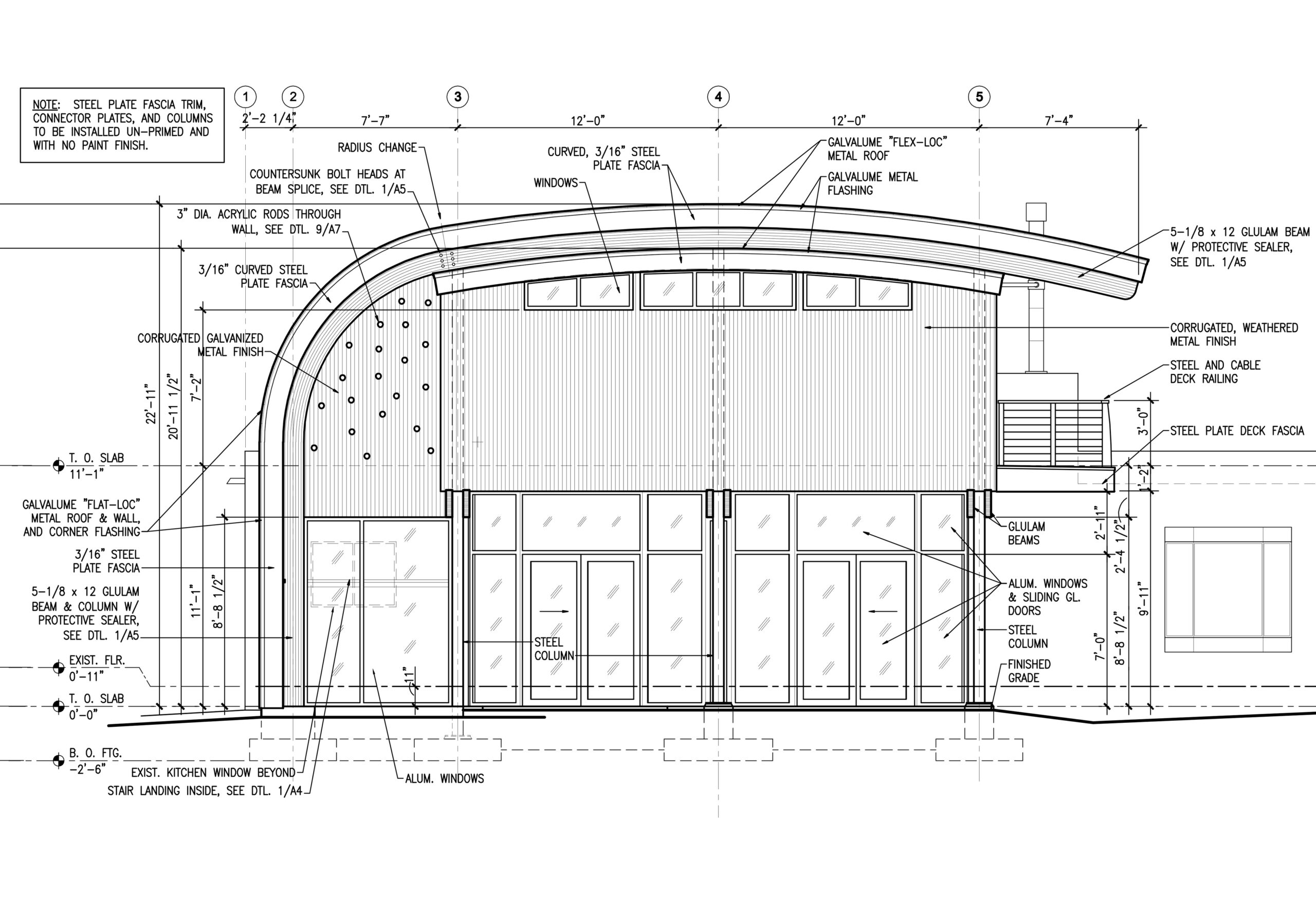
Prepare detailed, technical construction documents and specifications for obtaining a building permit, final cost estimates or bids to establish a contract cost with a builder, and for general use in construction.
The completed set of construction plans will coordinate the architectural design with all required engineering, interior design and landscape-site design.
Architect will submit, or assist the client or client’s general contractor in submitting, the completed plans for building permit approval. Architect will respond to building permit official’s questions and resolve issues regarding the project resulting in permit approval.
Construction Administration
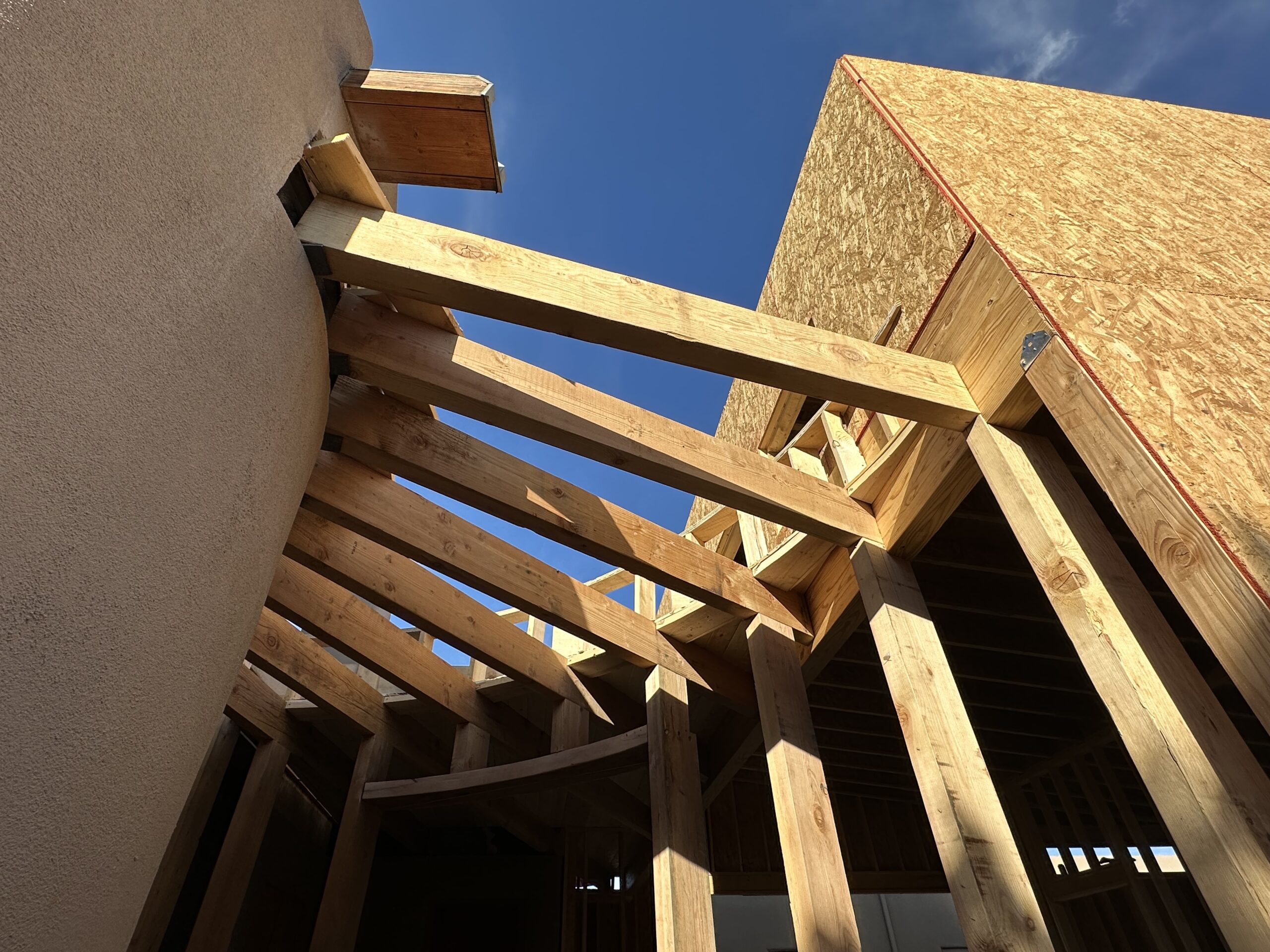
Provide construction phase services including:
Periodic project site visits to observe the progress and quality of the construction work and the builder’s adherence to the construction documents and design intent.
Be available throughout the construction phase via phone and email to respond to builder and client questions and clarify design details. Architect will provide additional drawing details when needed to clarify the design or to address design changes that may arise during construction.
Assist the client in making final selections of building products, cabinetry, finishes and appliances, plumbing and lighting fixtures if these items have not been chosen before construction commences.
Review contractor’s periodic payment requests and review contractor’s submittals of shop drawings and product samples-literature for compliance with the design intent.
Conduct a final walk-through of the completed construction and prepare a “punchlist” of final corrections required for client to occupy the project and make final payment to the builder.